
As I stirred the vibrant hues of sizzling vegetables in my kitchen, the enticing scent of sesame oil wafted through the air, whisking me away to the bustling streets of Seoul. Today, I’m excited to share my take on a classic dish that’s perfect for any occasion: Japchae, or Korean stir-fried noodles. This nutritious gem features chewy sweet potato glass noodles mixed with a medley of colorful veggies and your choice of protein, making it not only a feast for the eyes but also a comforting meal that everyone will love. The best part? It’s incredibly quick to whip up and can easily be customized to satisfy even the pickiest eaters. So, are you ready to dive into the delightful world of Japchae and make your taste buds dance?
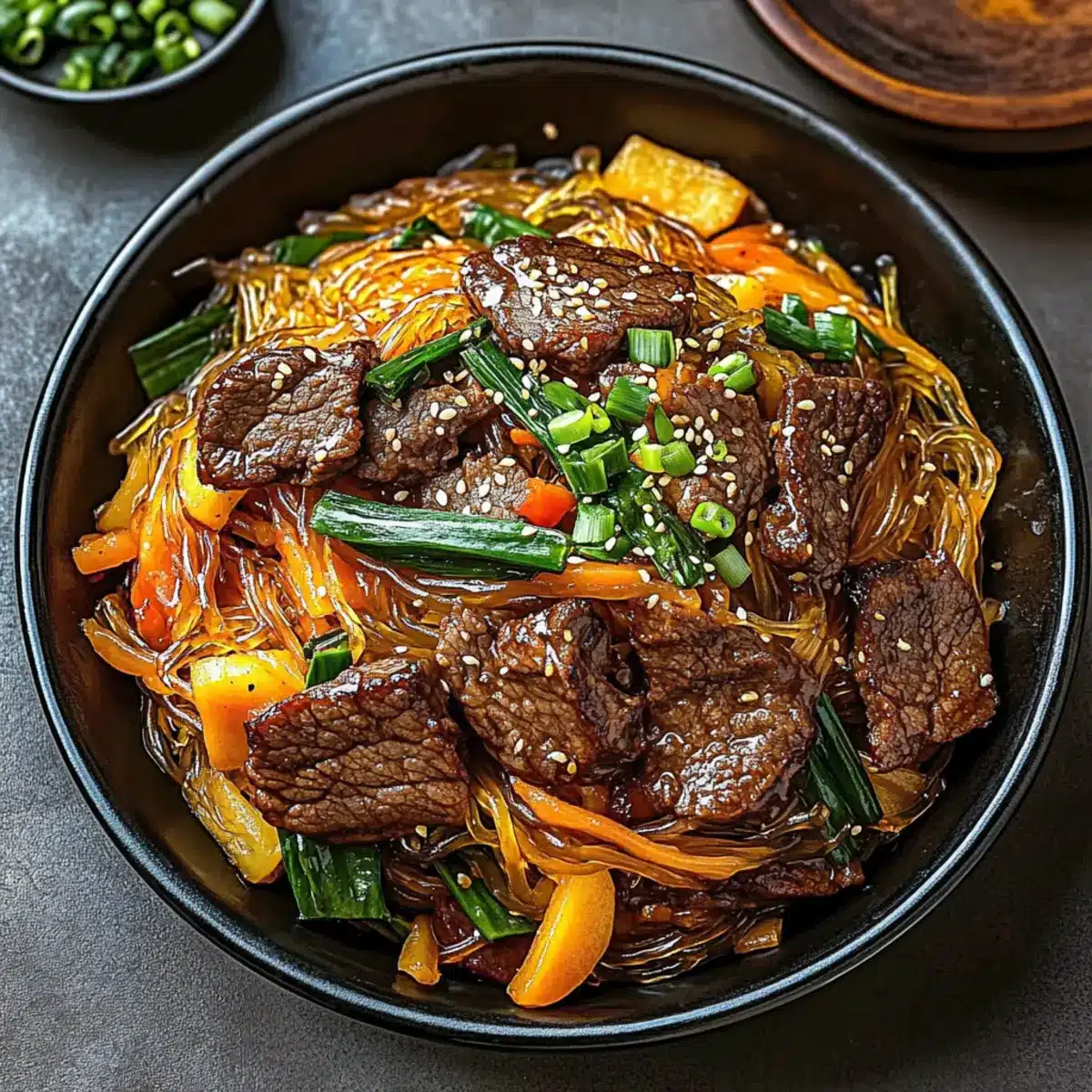
Why is Japchae a Must-Try Dish?
Vibrant Colors: This dish is a feast for your eyes, featuring a stunning array of colorful vegetables.
Quick Preparation: Perfect for busy weeknights, Japchae comes together in under 30 minutes, allowing you to enjoy a homemade meal without the fuss.
Customizable Delights: Whether you prefer chicken, tofu, or a spicy kick, you can tailor this recipe to your tastebuds and dietary needs.
Nutritious Goodness: Packed with vitamins and minerals from fresh veggies and sweet potato noodles, you’ll feel good about indulging.
Crowd-Pleasing Favorite: Serve it at family gatherings or potlucks, and watch it disappear in no time—everyone loves this beloved Korean classic!
Looking for more quick and vibrant meals? Check out these easy Asian recipes to add variety to your dinner table!
Japchae Ingredients
Discover everything you need to create this delicious Korean stir-fried noodle dish!
For the Noodles
- Sweet Potato Noodles (Dangmyeon) – Provides a chewy texture and unique appearance; you can substitute with glass noodles or rice vermicelli.
For the Protein
- Beef – Adds protein and richness; for a vegetarian option, consider using chicken, tofu, or mushrooms.
For the Vegetables
- Mixed Vegetables (e.g., carrots, spinach, bell peppers) – Contributes color, nutrition, and balance; feel free to swap in seasonal veggies or frozen stir-fry mixes.
For the Sauce
- Soy Sauce – Offers umami flavor; using low-sodium soy sauce is a healthier alternative.
- Sesame Oil – Enhances aroma and flavor; substitute with olive oil for a lighter taste, though it’s less authentically Korean.
For the Garnish
- Green Onions – Adds freshness as a garnish; you can omit or substitute with chives if desired.
With the right ingredients, you’re all set to dive into making homemade Japchae!
Step‑by‑Step Instructions for Japchae
Step 1: Prep Ingredients
Begin by soaking sweet potato noodles (dangmyeon) in hot water for 30 minutes, allowing them to soften. While the noodles soak, thinly slice your beef and chop the mixed vegetables (like carrots, spinach, and bell peppers) to prepare for quick stir-frying. You’ll want everything ready to ensure a smooth cooking process.
Step 2: Stir-Fry Beef
In a large pan or wok, heat 2 tablespoons of sesame oil over medium-high heat. Add the sliced beef to the pan in a single layer; cook for about 3-4 minutes or until the beef is nicely browned and no longer pink. Once cooked, remove the beef from the pan and set it aside to keep it warm and juicy.
Step 3: Cook Vegetables
Using the same pan, add a bit more sesame oil if needed. Toss in your chopped vegetables and stir-fry them for about 3-5 minutes, or until they are tender yet still vibrant and crisp. Stir frequently to avoid burning, and look for a lovely glossy finish as the oil coats the veggies, enhancing their natural colors.
Step 4: Combine Noodles
Drain the soaked sweet potato noodles and add them to the pan with the cooked vegetables. Next, fold in the previously cooked beef and drizzle with about 4 tablespoons of soy sauce. Gently toss everything together using tongs or a spatula, ensuring the noodles soak up the flavorful sauce and everything is well combined, approximately 2-3 minutes.
Step 5: Finalize Dish
Taste your delicious Japchae and adjust the seasoning as needed, adding more soy sauce or sesame oil for depth. Once everything is heated through and well-mixed, garnish with sliced green onions before serving. This will add a fresh touch to the dish, making it not only gorgeous but appetizing as well.
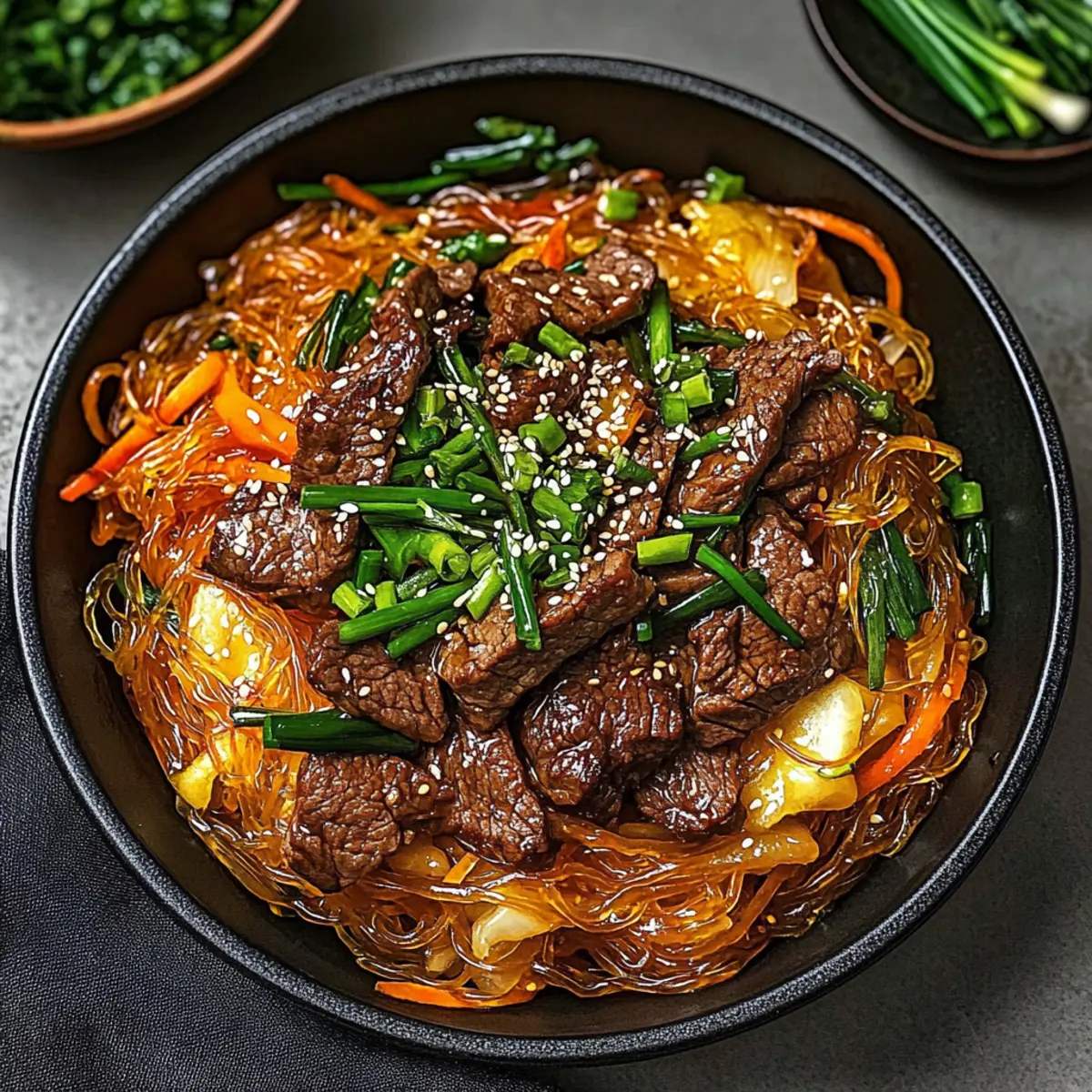
Japchae Variations & Substitutions
Feel free to let your imagination run wild and tailor this Japchae recipe to match your taste cravings!
- Dairy-Free: Omit any dairy-based sauces or sides, or use coconut aminos for additional sweetness.
- Vegetarian: Substitute beef with tofu or portobello mushrooms to maintain a hearty texture and flavor.
- Spicy Kick: Incorporate a tablespoon of gochujang or a sprinkle of red pepper flakes to heat things up!
- Flavor Boost: Add a splash of rice vinegar or a dash of sesame seeds for an extra layer of flavor that brightens every bite.
- Nutty Twist: Toss in some toasted walnuts or cashews to introduce an unexpected crunch and richness.
- Gluten-Free: Opt for gluten-free soy sauce or tamari, and ensure your noodles are labeled gluten-free for a safe dish.
- Seasonal Veggies: Use whatever vegetables you have on hand or in season, like zucchini, broccoli, or snap peas, to keep it fresh and exciting.
- Loaded Japchae: Pile on more protein by adding shredded chicken or shrimp, making it a filling meal that satisfies every appetite.
Remember, cooking is about joy and creativity—check out Expert Tips for Japchae for more inspiration on how to make each variation truly unique!
How to Store and Freeze Japchae
Fridge: Store any leftover Japchae in an airtight container for up to 3 days. This keeps the flavors intact while the noodles maintain their delightful texture.
Freezer: For longer storage, freeze Japchae in a freezer-safe container for up to 2 months. To thaw, simply transfer to the fridge overnight before reheating.
Reheating: Gently reheat Japchae in a pan over low heat, adding a splash of water or soy sauce to prevent sticking and keep it moist. A quick stir-fry is perfect to revive the original taste!
Portion Control: Consider packing single servings for easy meals throughout the week, making it simpler to enjoy your homemade Japchae anytime.
Expert Tips for Japchae
- Soak Smartly: Ensure you soak the sweet potato noodles for at least 30 minutes to achieve that perfect chewy texture; under-soaking can leave them tough.
- Stir-Fry Efficiently: Avoid overcrowding the pan when cooking vegetables; this helps maintain their crunch and vibrant color, essential for a well-balanced Japchae.
- Adjust Flavor: Taste as you go! Adding a splash more soy sauce or a touch of sesame oil towards the end can elevate the flavors of your Japchae to new heights.
- Batch Cooking: Consider making Japchae in larger quantities; it stores well in the fridge and tastes delicious cold, making it perfect for meal prep.
- Vegetable Variety: Don’t hesitate to mix up your veggies! Seasonal changes can inspire different combinations, keeping your Japchae both exciting and nutritious.
What to Serve with Traditional Korean Japchae?
There’s something truly special about crafting a balanced meal around this comforting dish, where flavors harmonize beautifully.
-
Kimchi: This tangy, fermented side dish adds a zesty kick, enhancing the umami experience of your Japchae.
-
Crisp Side Salad: A fresh salad with mixed greens, cucumbers, and a light sesame dressing offers a refreshing contrast to the warm noodles.
-
Steamed Rice: Serve a scoop of fluffy steamed rice alongside Japchae for a filling and satisfying meal that rounds out the flavors perfectly.
-
Vegetarian Dumplings: These tender and savory bites elevate the meal with additional texture and taste, complementing the sweet and savory notes of the Japchae.
-
Spicy Tofu Stir-Fry: For those craving a bit of heat, this dish pairs wonderfully with the sweet noodles, creating a delightful balance of flavors.
-
Hot Green Tea: A warm cup of green tea clears the palate and adds a soothing element to the meal, promoting a sense of well-being and comfort.
Make Ahead Options
Preparing Japchae ahead of time is a fantastic way to save you precious minutes during busy weeknights! You can soak the sweet potato noodles (200 grams) up to 24 hours in advance and keep them in an airtight container in the refrigerator. Additionally, consider slicing your beef and vegetables ahead, which can be done up to 3 days prior. Simply store them separately in the fridge to maintain freshness. When you’re ready to finish the dish, stir-fry your beef and vegetables as the original recipe instructs, then add the pre-soaked noodles and sauce. This way, you’ll enjoy delicious Japchae with minimal effort, just as satisfying as when freshly made!
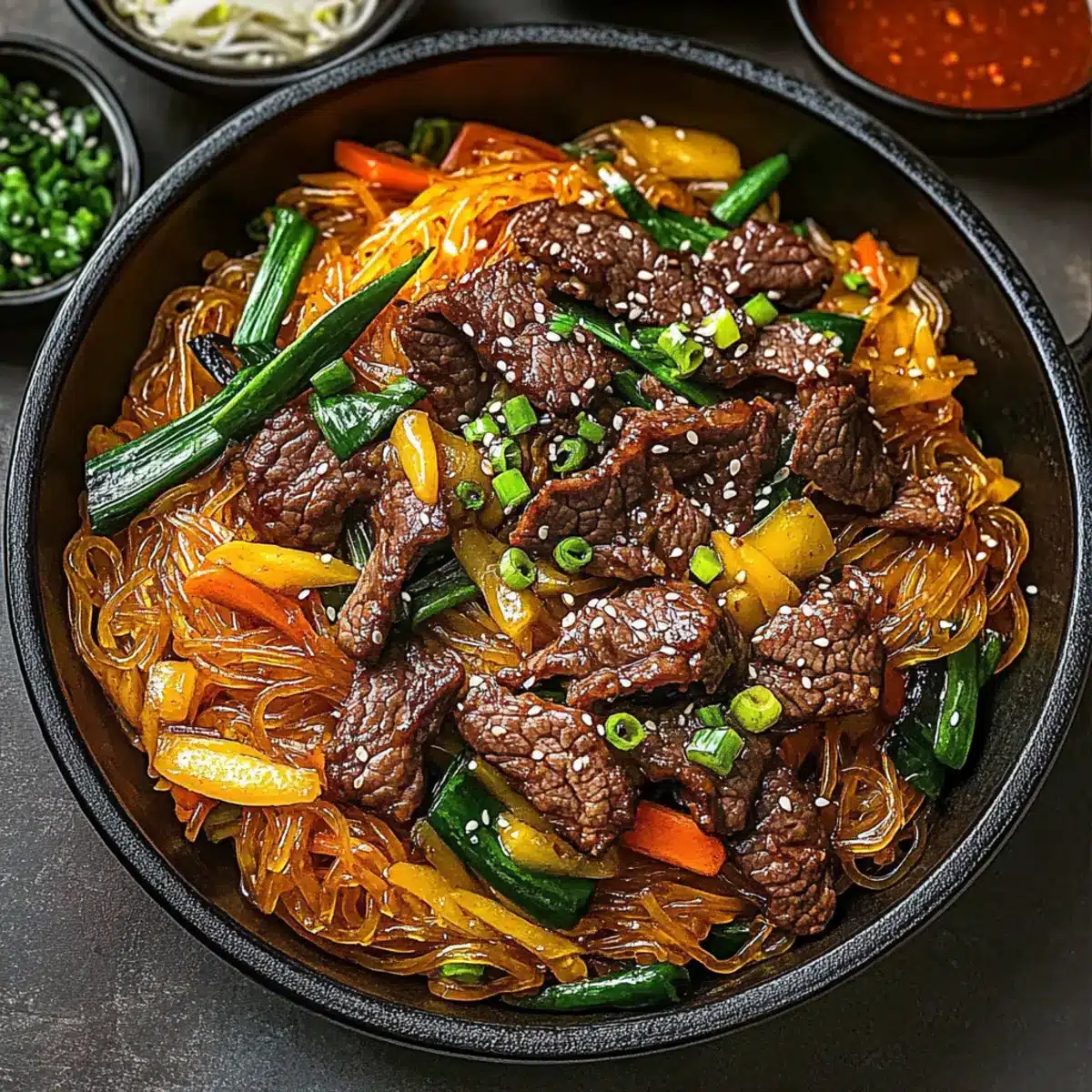
Japchae Recipe FAQs
What type of sweet potato noodles should I use for Japchae?
Absolutely! The authentic choice for Japchae is sweet potato noodles, known as Dangmyeon. These noodles provide a chewy texture that’s essential for the dish. If you can’t find them, glass noodles or rice vermicelli are excellent substitutes.
How do I store leftover Japchae?
To keep your leftover Japchae fresh, store it in an airtight container in the fridge for up to 3 days. This method helps retain the flavors and ensures the noodles maintain their delightful texture. Just remember to give it a little toss before serving to redistribute the flavors!
Can I freeze Japchae, and how?
Yes! To freeze your Japchae, first cool it to room temperature, then transfer it to a freezer-safe container. It can last for up to 2 months in the freezer. When you’re ready to enjoy it, simply thaw it overnight in the fridge and reheat with a splash of water or soy sauce in a pan to keep the noodles from sticking together.
What if my sweet potato noodles were too chewy?
Very! If your sweet potato noodles turn out too chewy, it might be because they were under-soaked. Always soak them for at least 30 minutes in hot water before cooking for that perfect texture. If overcooked, they may become mushy, so keep an eye on your cooking time!
Are there any allergy considerations with Japchae?
Definitely! If serving Japchae to guests, be mindful of common allergens such as soy (in soy sauce). You can opt for gluten-free soy sauce alternatives to accommodate those who are gluten-sensitive. For dietary modifications, use tofu or omit animal products for a vegan-friendly dish.
Can I use different vegetables in Japchae?
Of course! Japchae is highly customizable. You can use any vegetables you have on hand—such as zucchini, mushrooms, or snap peas. Just ensure they are sliced thinly to cook evenly. Mixing seasonal vegetables will not only enhance the dish’s flavor but also its nutrition!
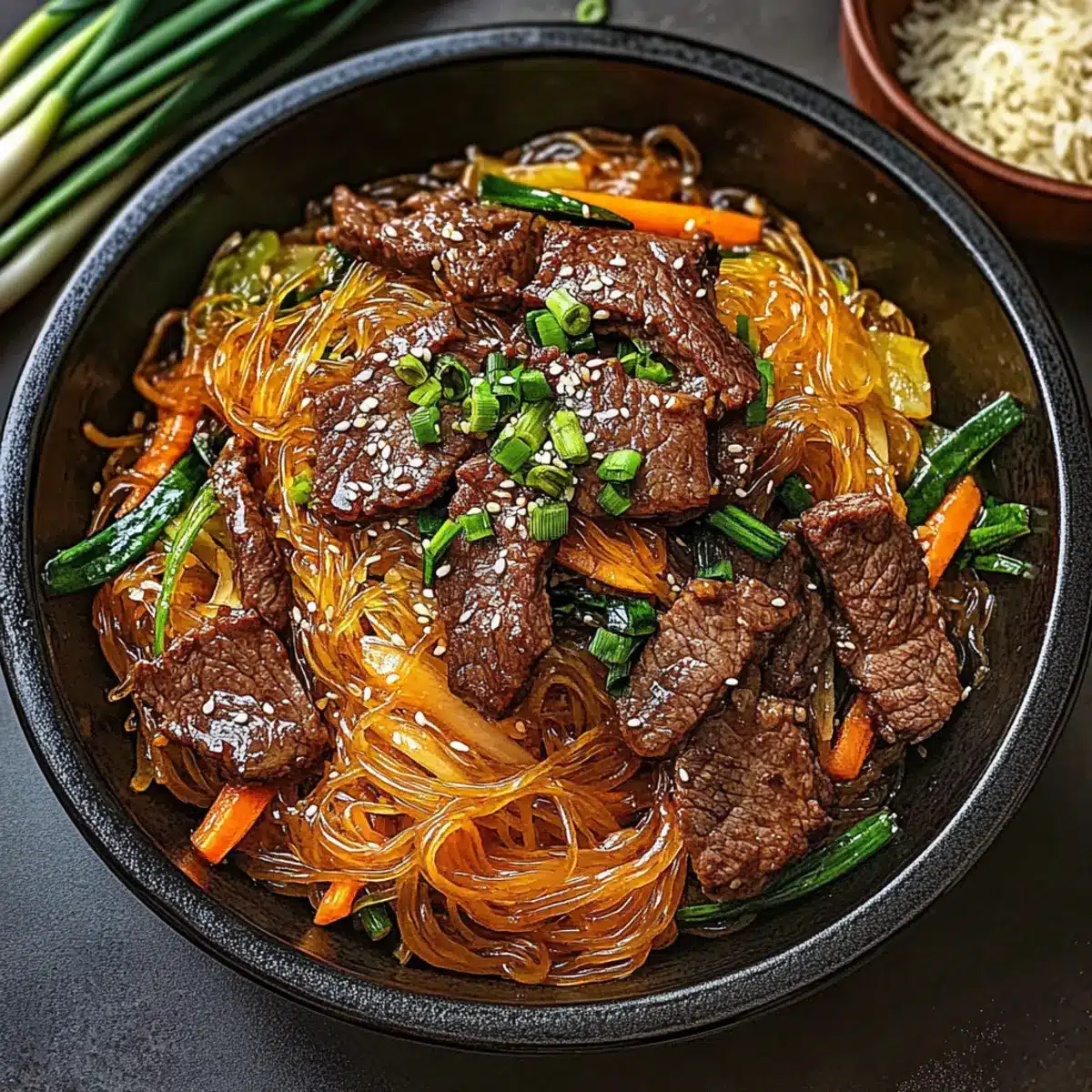
Savory Japchae: Your New Favorite Korean Noodle Dish
Ingredients
Equipment
Method
- Begin by soaking sweet potato noodles in hot water for 30 minutes until pliable. Thinly slice beef against the grain and prepare vegetables.
- Heat sesame oil in a large pan over medium-high heat. Add sliced beef and cook without stirring for 2-3 minutes until browned. Remove beef and set aside.
- In the same pan, add more sesame oil if necessary and stir-fry the sliced vegetables for 3-5 minutes until tender yet crisp.
- Drain the soaked noodles and add to the pan with the cooked beef. Pour in soy sauce and mix vigorously over medium heat for 2-3 minutes.
- Taste and adjust seasoning. Garnish with sliced green onions, and serve warm.
Leave a Reply