
As I stirred the vibrant hues of sizzling vegetables in my kitchen, the enticing scent of sesame oil wafted through the air, whisking me away to the bustling streets of Seoul. Today, I’m excited to share my take on a classic dish that’s perfect for any occasion: Japchae, or Korean stir-fried noodles. This nutritious gem features chewy sweet potato glass noodles mixed with a medley of colorful veggies and your choice of protein, making it not only a feast for the eyes but also a comforting meal that everyone will love. The best part? It’s incredibly quick to whip up and can easily be customized to satisfy even the pickiest eaters. So, are you ready to dive into the delightful world of Japchae and make your taste buds dance?
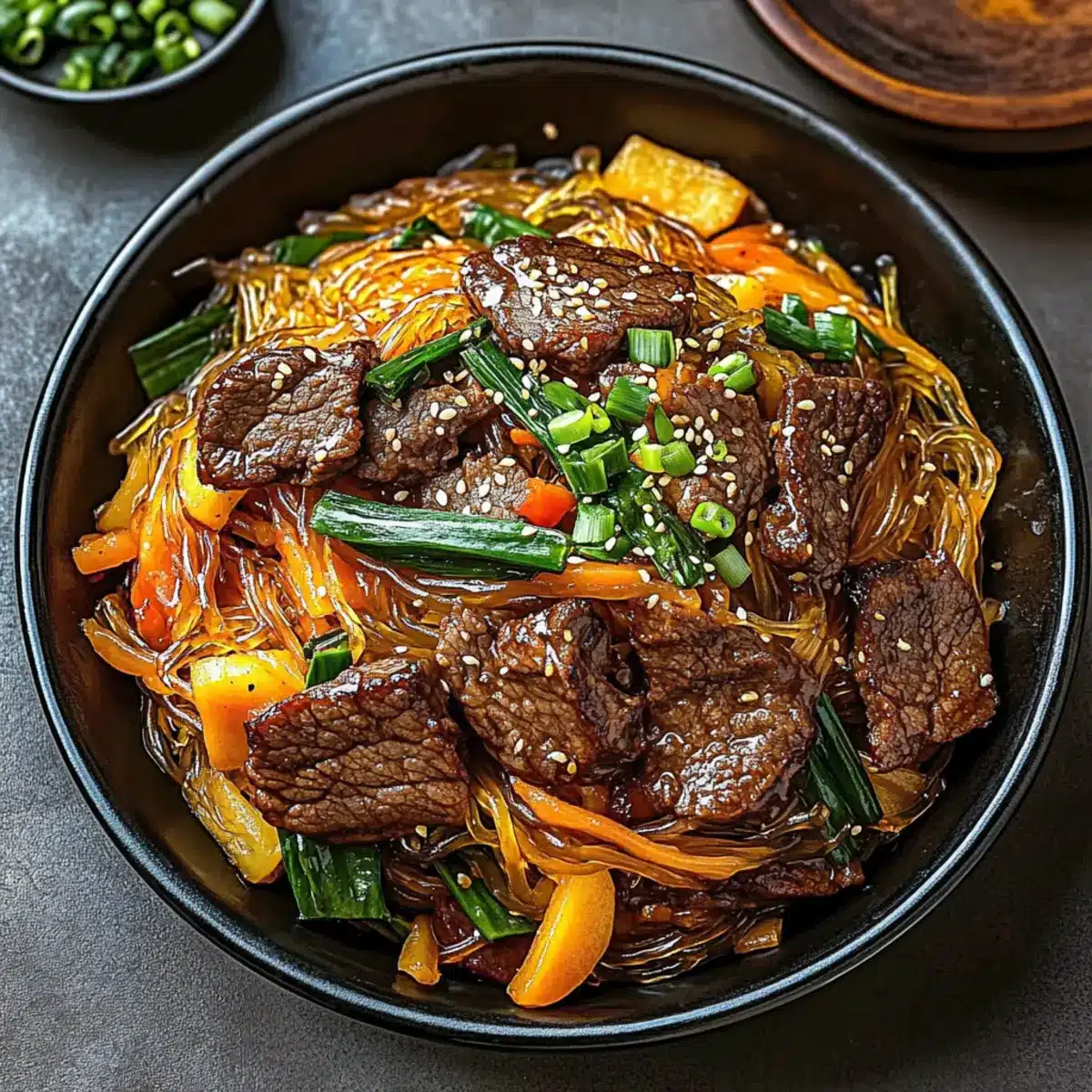
Why is Japchae a Must-Try Dish?
Vibrant Colors: This dish is a feast for your eyes, featuring a stunning array of colorful vegetables.
Quick Preparation: Perfect for busy weeknights, Japchae comes together in under 30 minutes, allowing you to enjoy a homemade meal without the fuss.
Customizable Delights: Whether you prefer chicken, tofu, or a spicy kick, you can tailor this recipe to your tastebuds and dietary needs.
Nutritious Goodness: Packed with vitamins and minerals from fresh veggies and sweet potato noodles, you’ll feel good about indulging.
Crowd-Pleasing Favorite: Serve it at family gatherings or potlucks, and watch it disappear in no time—everyone loves this beloved Korean classic!
Looking for more quick and vibrant meals? Check out these easy Asian recipes to add variety to your dinner table!
Japchae Ingredients
Discover everything you need to create this delicious Korean stir-fried noodle dish!
For the Noodles
- Sweet Potato Noodles (Dangmyeon) – Provides a chewy texture and unique appearance; you can substitute with glass noodles or rice vermicelli.
For the Protein
- Beef – Adds protein and richness; for a vegetarian option, consider using chicken, tofu, or mushrooms.
For the Vegetables
- Mixed Vegetables (e.g., carrots, spinach, bell peppers) – Contributes color, nutrition, and balance; feel free to swap in seasonal veggies or frozen stir-fry mixes.
For the Sauce
- Soy Sauce – Offers umami flavor; using low-sodium soy sauce is a healthier alternative.
- Sesame Oil – Enhances aroma and flavor; substitute with olive oil for a lighter taste, though it’s less authentically Korean.
For the Garnish
- Green Onions – Adds freshness as a garnish; you can omit or substitute with chives if desired.
With the right ingredients, you’re all set to dive into making homemade Japchae!
Step‑by‑Step Instructions for Japchae
Step 1: Prep Ingredients
Begin by soaking sweet potato noodles (dangmyeon) in hot water for 30 minutes, allowing them to soften. While the noodles soak, thinly slice your beef and chop the mixed vegetables (like carrots, spinach, and bell peppers) to prepare for quick stir-frying. You’ll want everything ready to ensure a smooth cooking process.
Step 2: Stir-Fry Beef
In a large pan or wok, heat 2 tablespoons of sesame oil over medium-high heat. Add the sliced beef to the pan in a single layer; cook for about 3-4 minutes or until the beef is nicely browned and no longer pink. Once cooked, remove the beef from the pan and set it aside to keep it warm and juicy.
Step 3: Cook Vegetables
Using the same pan, add a bit more sesame oil if needed. Toss in your chopped vegetables and stir-fry them for about 3-5 minutes, or until they are tender yet still vibrant and crisp. Stir frequently to avoid burning, and look for a lovely glossy finish as the oil coats the veggies, enhancing their natural colors.
Step 4: Combine Noodles
Drain the soaked sweet potato noodles and add them to the pan with the cooked vegetables. Next, fold in the previously cooked beef and drizzle with about 4 tablespoons of soy sauce. Gently toss everything together using tongs or a spatula, ensuring the noodles soak up the flavorful sauce and everything is well combined, approximately 2-3 minutes.
Step 5: Finalize Dish
Taste your delicious Japchae and adjust the seasoning as needed, adding more soy sauce or sesame oil for depth. Once everything is heated through and well-mixed, garnish with sliced green onions before serving. This will add a fresh touch to the dish, making it not only gorgeous but appetizing as well.
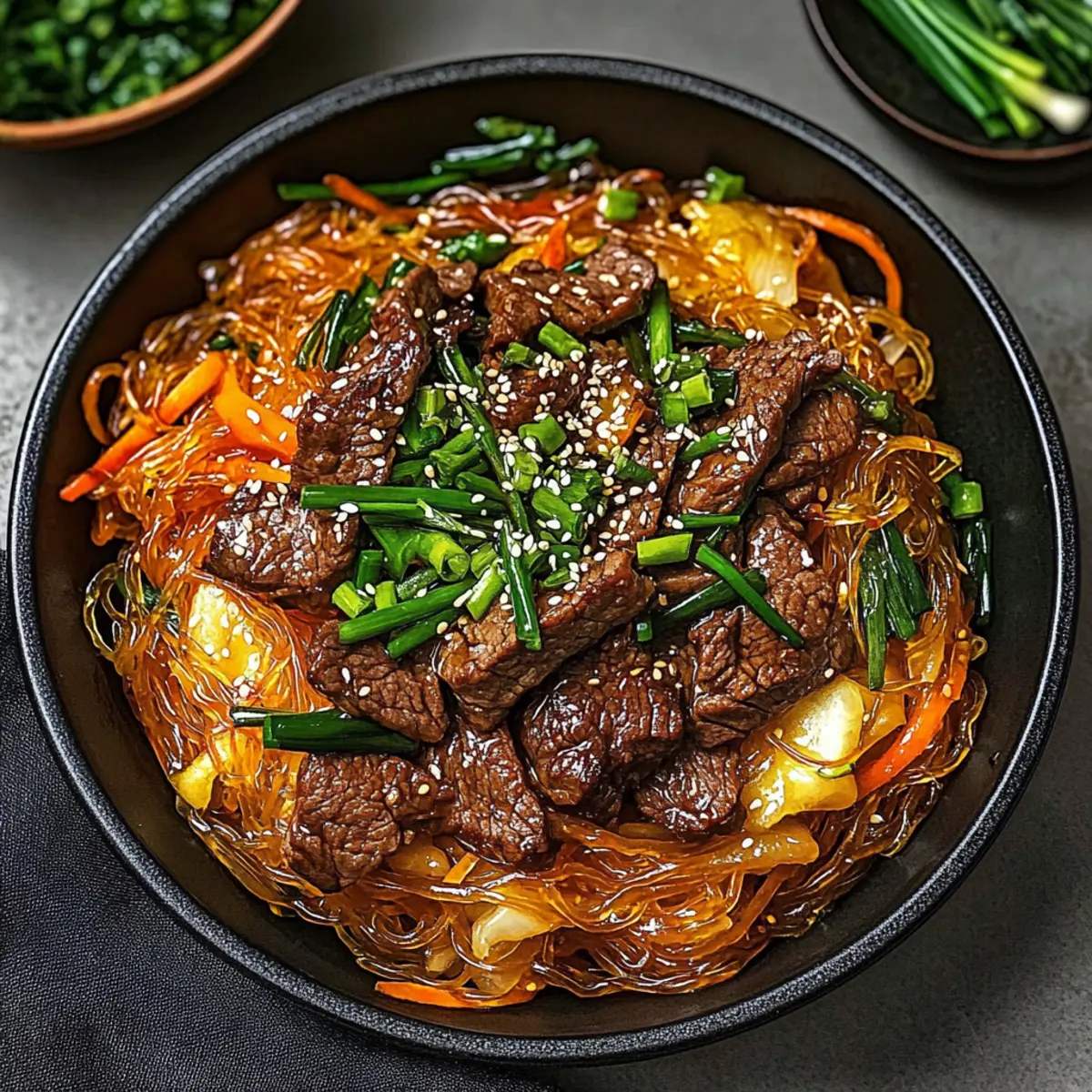
Storage Tips for Japchae
-
Fridge: Store leftover Japchae in an airtight container for up to 3 days to maintain its flavor and texture. Make sure it’s completely cooled before sealing to prevent moisture buildup.
-
Freezer: To freeze Japchae, place it in a freezer-safe container or bag, removing as much air as possible. It can be stored for up to 2 months; just be sure to label the container with the date.
-
Reheating: When ready to enjoy your frozen Japchae, thaw it in the fridge overnight. Reheat gently in a pan over low heat, adding a splash of water or soy sauce to restore moisture and avoid dryness.
-
Room Temperature: For optimal freshness, avoid leaving Japchae out at room temperature for more than 2 hours to prevent spoilage.
Japchae: Flavorful Customizations Await
Feel free to make this enchanting dish your own with these delightful variations and substitutions!
- Vegetarian Delight: Substitute beef with tofu or mushrooms to create a hearty vegetarian version that still delivers on flavor.
- Spicy Kick: Add a spoonful of gochujang or a sprinkle of red pepper flakes during cooking for a fiery twist that’ll light up your taste buds.
- Crispy Texture: Toss in a handful of bean sprouts for added crunch; they cook quickly and bring an extra layer of texture.
- Colorful Medley: Mix in seasonal vegetables like zucchini or snap peas to brighten up your dish and take advantage of nature’s offerings.
- Noodles Flexibility: If sweet potato noodles aren’t available, feel free to use glass noodles or even rice vermicelli for a satisfying bite.
- Garlic Lovers: Sauté some minced garlic alongside your vegetables for an aromatic boost that enhances the overall flavor of the dish.
- Nutty Finish: Drizzle a touch of roasted sesame seeds on top before serving for a nutty aroma and a delightful crunch.
- Citrusy Twist: You can brighten the flavors with a splash of lemon or lime juice just before serving; it’s a refreshing twist that’ll elevate your Japchae experience.
If you enjoyed these ideas, don’t forget to check out my tips on spicy Asian dishes for more culinary adventures!
Make Ahead Options
Preparing Japchae ahead of time is a fantastic way to save time on busy weeknights! You can soak the sweet potato noodles in hot water and slice the beef and mixed vegetables up to 24 hours in advance. Simply store the noodles and vegetables in separate airtight containers in the refrigerator to maintain their freshness and prevent browning. When you’re ready to enjoy your homemade Japchae, stir-fry the beef and vegetables as instructed, then add the pre-soaked noodles right into the mix. Toss everything together with the soy sauce and sesame oil for a delightful meal that tastes just as delicious as if made fresh that day!
Expert Tips for Japchae
-
Soak Noodles Properly: Ensure the sweet potato noodles are soaked in hot water adequately for at least 30 minutes to achieve the ideal chewy texture.
-
Cook in Batches: If you’re making a large amount, consider stir-frying the beef and vegetables in batches. This prevents overcrowding and ensures even cooking.
-
Keep Vegetables Crisp: Sauté vegetables quickly over high heat to maintain their vibrant colors and crispness. Avoid cooking them for too long to keep that perfect bite.
-
Watch the Sauce: Be cautious with soy sauce; too much can make the dish salty. Start with a smaller amount and adjust to your taste for the perfect balance.
-
Creative Variations: Feel free to experiment with protein and veggies based on what you have at home. Japchae is incredibly flexible, so mix and match to create your ideal dish!
What to Serve with Japchae?
As the tempting aroma of sweet potato noodles fills your kitchen, you’ll want to create a delightful meal experience that complements this Korean classic.
- Spicy Kimchi: This fermented dish adds a zesty kick and a crunchy texture that contrasts beautifully with the tender noodles.
- Crispy Spring Rolls: Light and crispy, spring rolls pack fresh vegetables and herbs inside, creating a refreshing balance to the meal.
- Savory Tofu Miso Soup: A warm, comforting soup that enhances the flavors of Japchae while providing a cozy, umami backdrop.
- Refreshing Cucumber Salad: Cool and crunchy, a simple cucumber salad with a tangy dressing brings a refreshing element that brightens each bite.
- Sweet and Sour Radish Salad: The sweet, tangy crunch of pickled radish salad perfectly complements the rich flavors of Japchae, keeping your palate excited.
- Seared Rainbow Trout: This flaky fish adds a touch of elegance with its mild flavor, pairing beautifully with the savory notes of the noodles.
- Jasmine Rice: Serve Japchae over a bed of fluffy jasmine rice for a heartwarming plate that gives the dish an extra layer of comfort.
- Light Beer or Soju: To sip alongside, enjoy a cold, crisp beer or a smoother soju that enhances the overall culinary experience.
- Mango Sticky Rice: This coconut-infused dessert provides a sweet finish, balancing the savory meal with a tropical twist.
- Green Tea: A cup of freshly brewed green tea enhances digestion and offers a warm, serene closure to your delightful dinner.
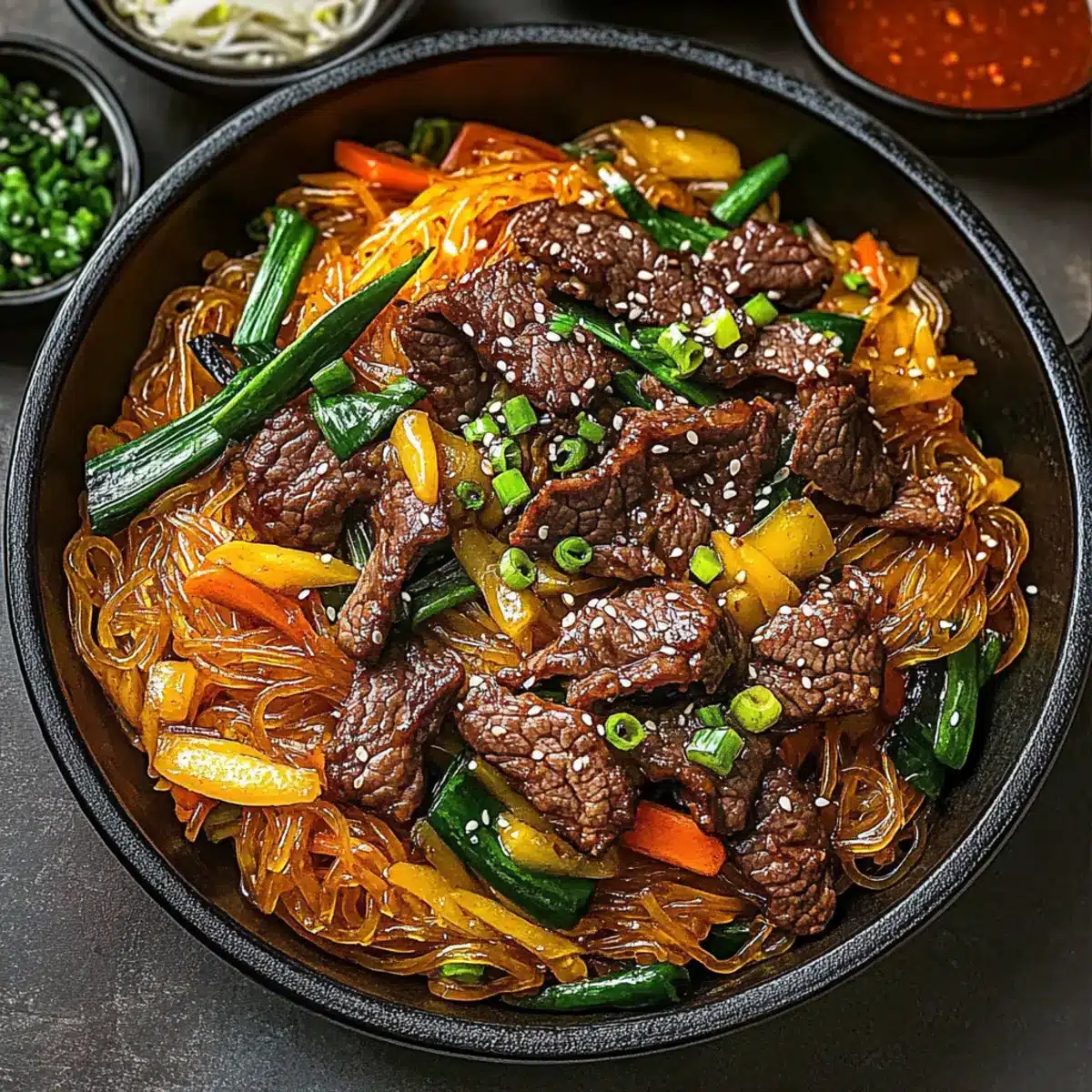
Japchae Recipe FAQs
What type of sweet potato noodles should I use for Japchae?
Absolutely! Traditional Japchae uses sweet potato noodles, known as dangmyeon, which provide that desirable chewy texture. If you can’t find them, feel free to substitute with glass noodles or rice vermicelli, though the texture might differ slightly.
How long can I store leftover Japchae in the fridge?
You can store leftover Japchae in an airtight container for up to 3 days! Make sure it’s completely cooled before sealing to maintain its flavor and prevent moisture build-up.
Can I freeze Japchae? If so, how?
Very much so! To freeze Japchae, simply place it in a freezer-safe container or bag, removing as much air as possible. It can be stored for up to 2 months. Don’t forget to label with the date! When ready to eat, thaw it in the fridge overnight, then gently reheat in a pan over low heat with a splash of water or soy sauce to restore its moisture.
What if my noodles turn mushy while cooking?
Great question! Ensure the sweet potato noodles are soaked properly for the full 30 minutes and avoid overcooking them. They should be tender yet chewy when added to your stir-fry. If they do become mushy, it might be due to excessive cooking or soaking time, so keep an eye on them!
Are there any dietary considerations for Japchae?
Yes, absolutely! Japchae is quite versatile; you can easily make it vegetarian or vegan by using tofu instead of beef. Additionally, for those with glucose sensitivity or high blood pressure, using low-sodium soy sauce will help maintain the dish’s delicious flavor without sacrificing health.
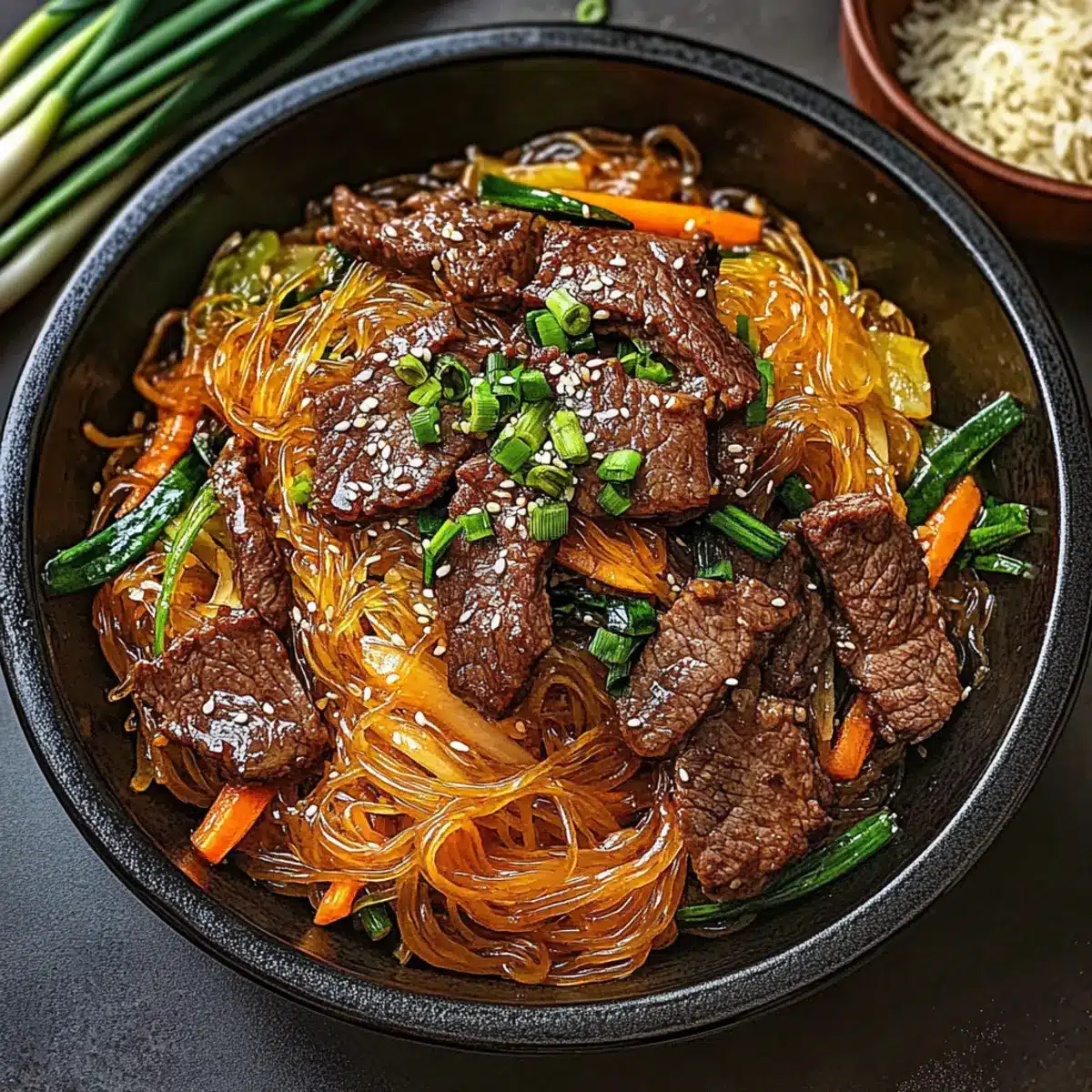
Savory Japchae: Your New Favorite Korean Noodle Dish
Ingredients
Equipment
Method
- Soak the sweet potato noodles in hot water for 30 minutes until softened. Thinly slice beef and chop your mixed vegetables.
- Heat 2 tablespoons of sesame oil in a large pan over medium-high heat. Add sliced beef and cook for 3-4 minutes until browned. Set aside.
- In the same pan, stir-fry the chopped vegetables for 3-5 minutes until tender and vibrant.
- Drain the soaked noodles and add them to the pan with vegetables. Fold in the cooked beef and drizzle with soy sauce. Toss together for 2-3 minutes.
- Adjust seasoning if needed, garnish with sliced green onions, and serve.
Leave a Reply