
As the first whiff of stir-fried noodles meets my nose, memories of cozy family dinners flood in. There’s something magical about making Japchae, the traditional Korean stir-fried noodles that are more than just a meal; they’re a celebration on a plate. This dish features chewy sweet potato noodles mixed with tender beef and a colorful medley of vegetables, all dancing in a savory soy sauce and sesame oil blend. What truly excites me is how quickly I can whip it up, making it perfect for weeknight dinners or last-minute gatherings. Plus, it’s incredibly versatile—whether you prefer chicken, tofu, or extra spice, it easily adapts to fit your cravings. Ready to delve into this flavorful adventure? Let’s bring a taste of Korea to your kitchen!
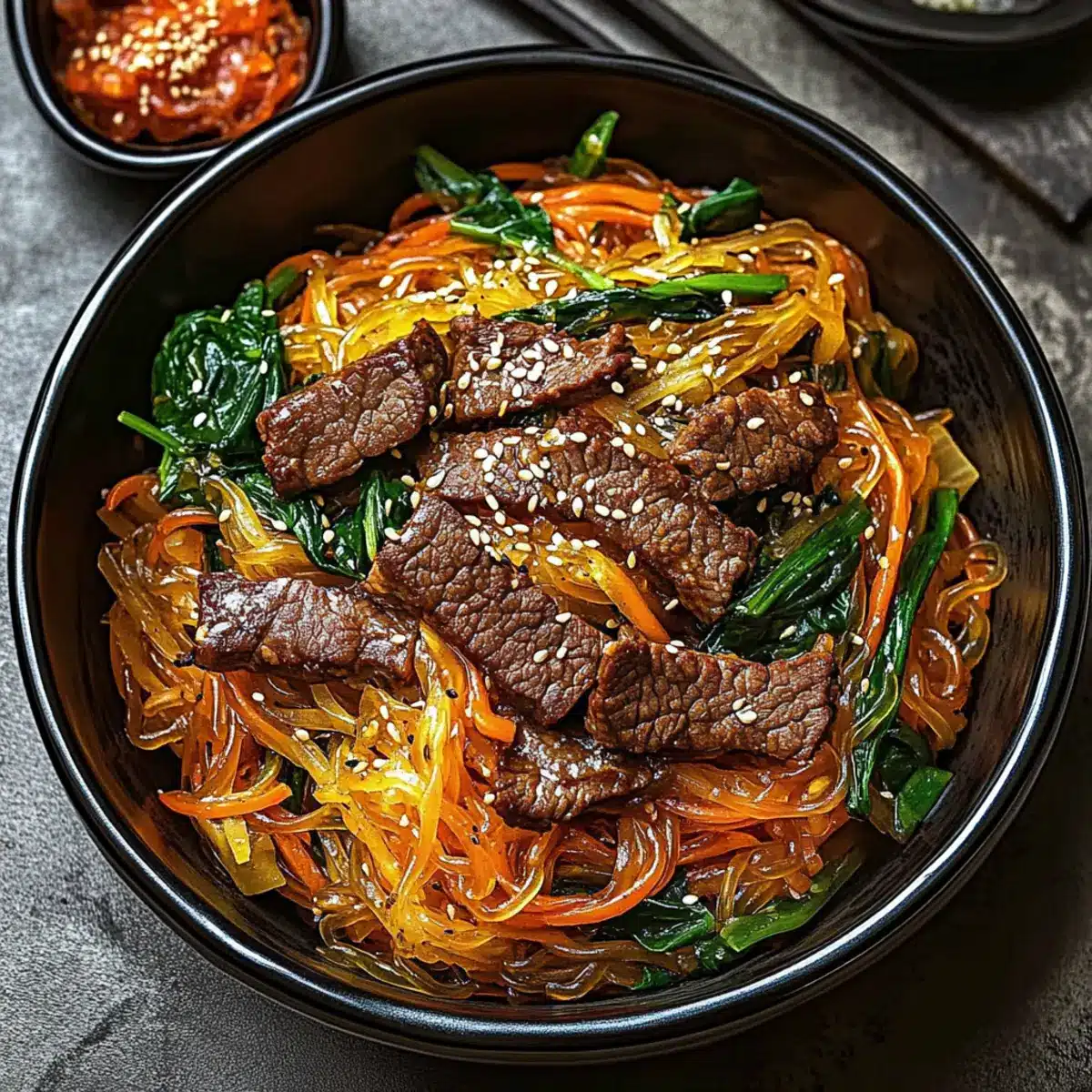
Why Is Japchae So Special?
Vibrant Colors: Japchae bursts with colors from fresh vegetables, making it visually stunning and inviting.
Customizable Delight: Easily swap in chicken, tofu, or any veggies you have on hand for a personal touch.
Quick Preparation: Whip it up in under 30 minutes, perfect for a busy weeknight with friends or family.
Nutritious Choice: Packed with vitamins from vegetables and energy from sweet potato noodles, it’s a guilt-free indulgence.
Crowd Favorite: This dish is sure to impress at gatherings, often leaving guests asking for seconds!
Cultural Experience: Enjoy a taste of Korean tradition with each bite, bringing a sense of joy and togetherness to your table.
Japchae Ingredients
• For your culinary journey into the world of Japchae, gather these essential ingredients to create a flavorful dish that dances on your palate.
For the Noodles
- Sweet Potato Noodles (Dangmyeon) – These provide a chewy texture and unique appearance; you can substitute with glass noodles or rice vermicelli if needed.
For the Protein
- Beef – Adds rich protein to the dish; consider using chicken, tofu, or mushrooms for a vegetarian-friendly option.
For the Vegetables
- Mixed Vegetables (e.g., carrots, spinach, bell peppers) – These contribute vibrant colors and nutrition; feel free to swap in seasonal vegetables or frozen stir-fry mixes based on what you have.
For the Sauce
- Soy Sauce – Offers that essential umami flavor; try using low-sodium soy sauce for a healthier twist.
For the Aroma
- Sesame Oil – Enhances the dish’s aroma and flavor; you can substitute with olive oil for a lighter touch, though it may not taste as authentically Korean.
For the Garnish
- Green Onions – These add a fresh touch as a garnish; they can be omitted or replaced with chives if desired.
Embrace the joy of cooking and indulge in the wonderful flavors of this Japchae dish, crafted to be as delightful as it is nourishing!
Step‑by‑Step Instructions for Japchae
Step 1: Prep Ingredients
Start by soaking 8 ounces of sweet potato noodles in hot water for about 30 minutes until they become pliable and translucent. While the noodles soak, thinly slice your choice of protein, such as beef or tofu, and prepare the mixed vegetables, including carrots, spinach, and bell peppers. Gather all ingredients to ensure a smooth cooking process.
Step 2: Stir-Fry Beef
In a large skillet or wok, heat 2 tablespoons of sesame oil over medium-high heat until shimmering. Add the sliced beef and cook for 3-4 minutes, stirring frequently, until browned and cooked through. Once finished, remove the beef from the pan and set aside on a plate, allowing the flavors to meld in the skillet.
Step 3: Cook Vegetables
Using the same skillet, add a little more sesame oil if needed, then toss in the prepared vegetables. Stir-fry for 3-5 minutes, maintaining medium-high heat to ensure the veggies remain tender yet crisp. You want them to brighten in color and soften slightly while still retaining their vibrant crunch—this is where the magic of Japchae begins!
Step 4: Combine Noodles
Drain the soaked sweet potato noodles and add them into the skillet with the cooked vegetables. Immediately pour in the previously stir-fried beef, followed by 4 tablespoons of soy sauce. Mix everything together continuously for about 2-3 minutes, ensuring that the noodles are well-distributed and heated through, soaking up all those delicious flavors.
Step 5: Finalize Dish
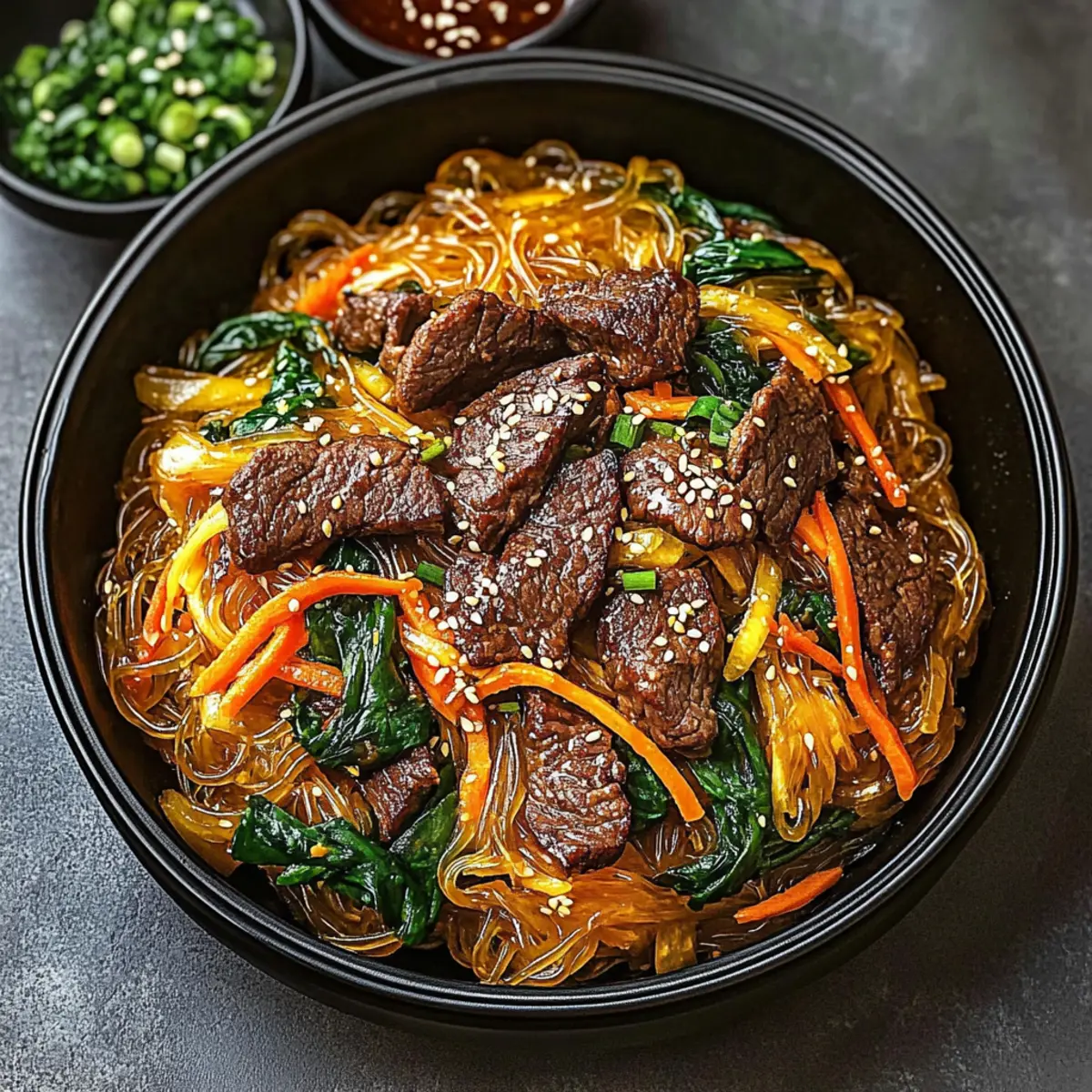
Taste your Japchae and adjust the seasoning as necessary, adding more soy sauce or sesame oil if desired. Once you achieve the perfect balance of savory and sweet, remove the skillet from heat. Garnish with freshly sliced green onions to add a pop of color and freshness before serving this enticing dish hot or at room temperature.
Make Ahead Options
Japchae is perfect for meal prep, allowing you to save time on busy weeknights! You can prepare all the ingredients—soak the 8 ounces of sweet potato noodles and slice the vegetables and protein—up to 24 hours in advance. Store them in airtight containers in the refrigerator to keep everything fresh. When you’re ready to cook, simply stir-fry the beef and vegetables, combine with the pre-soaked noodles, and add the soy sauce until heated through. This method ensures that your Japchae maintains its delightful texture and flavor, so you can enjoy a delicious homemade meal with minimal effort. It’s just as tasty when finished, making it a fantastic option for any schedule!
How to Store and Freeze Japchae
Fridge: Store leftover Japchae in an airtight container in the refrigerator for up to 3 days to maintain its freshness and flavor.
Freezer: For longer storage, freeze Japchae in a zip-top bag or airtight container for up to 2 months. Thaw in the fridge overnight before reheating.
Reheating: Gently reheat the noodles in a pan over low heat with a splash of water or sesame oil to bring back their original texture and taste.
Room Temperature: Avoid leaving Japchae out at room temperature for more than 2 hours to prevent spoilage and ensure food safety.
What to Serve with Traditional Korean Japchae
Imagine a table filled with delightful flavors and colors, creating the perfect backdrop for a memorable meal.
-
Kimchi: This fermented side dish adds a tangy kick that contrasts beautifully with the sweet flavors of japchae, enhancing each bite.
-
Korean Fried Chicken: For those who crave something crispy, the crunch of Korean fried chicken pairs perfectly, striking a balance between sweet and savory.
-
Cucumber Salad: Refreshing and light, a cold cucumber salad provides a crisp texture and a cool counterpoint to the warm, savory noodles.
-
Steamed Rice: Serve alongside steaming white rice to soak up the remaining soy sauce and sesame flavors, making for a hearty, satisfying meal.
-
Spicy Korean BBQ Tofu: For a vegetarian twist, the spicy marinated tofu adds a unique flavor component while matching the dish’s overall savory richness.
-
Green Tea: A calming cup of warm green tea complements the meal, highlighting the Asian influences and aiding in digestion.
-
Fruit Salad: A light fruit salad with seasonal fruits offers a refreshing and sweet contrast, cleansing the palate after indulging in the savory noodles.
Let your creativity flow and consider these pairings to elevate your japchae experience!
Japchae: Tasty Twists on Tradition
Feel free to play around with your Japchae and make it your own delicious creation!
-
Dairy-Free: Swap any non-dairy butter for a completely dairy-free version without compromising flavor.
Change the textures by tossing in some crunchy nuts for an exciting twist. -
Veggie-Packed: Add snap peas, zucchini, or mushrooms for extra color and nutrients.
Seasonal vegetables elevate this dish, making every bite a delightful adventure! -
Spicy Kick: Stir in a teaspoon of gochujang or red pepper flakes to enhance the heat level.
The perfect choice for spicy food lovers who crave a bold flavor profile. -
Protein Options: Use chicken, beef, or tofu depending on your taste preferences and dietary needs.
Each protein complements the chewy noodles beautifully and keeps your meal satisfying. -
Noodle Alternatives: Try using rice noodles or soba noodles if you’re looking for a different texture.
This can lead to equally delightful flavors while keeping things exciting! -
Fresh Herbs: Incorporate fresh cilantro or basil for an aromatic upgrade in flavor.
These herbs add a refreshing dimension that harmonizes with the dish’s richness. -
Saucy Goodness: Experiment with coconut aminos or tamari as alternatives to soy sauce.
These options cater to gluten-free diets while providing a different but lovely umami taste. -
Savory Additions: Toss in some shiitake mushrooms or kimchi for unique tang and depth of flavor.
Elevate the dish to another level with these savory delights straight from Korean cuisine.
Enhance your Japchae experience even more by serving it alongside a delightful Korean bibimbap.
Expert Tips for Perfect Japchae
-
Soak Noodles Properly: Ensure sweet potato noodles are soaked in hot water long enough to maintain their chewy texture. Over-soaking can lead to mushiness.
-
Cook Veggies Right: Stir-fry vegetables quickly at medium-high heat to keep them crisp. Avoid overcrowding the pan to ensure even cooking.
-
Balance Flavors: Adjust soy sauce and sesame oil to your preference. Taste as you go, enhancing the savory depth without overpowering the dish.
-
Batch Cooking: Prepare Japchae in larger quantities to enjoy throughout the week. It’s just as delicious cold, making leftovers a joy!
-
Customize with Care: Feel free to experiment with protein and veggies based on your taste, but keep the focus on using fresh ingredients for the best Japchae experience.
Japchae Recipe FAQs
How do I choose the right sweet potato noodles?
Absolutely! When selecting sweet potato noodles (Dangmyeon), look for ones that are firm and translucent without any dark spots or signs of damage. They should feel smooth and slightly pliable. If you can’t find them, glass noodles or rice vermicelli can be a great substitute, offering a similar texture.
What’s the best way to store leftover Japchae?
To keep your leftover Japchae fresh, store it in an airtight container in the refrigerator for up to 3 days. This method helps retain the flavors and texture. When reheating, add a splash of water or sesame oil to restore moisture and prevent it from drying out.
Can I freeze Japchae for later use?
Very! To freeze Japchae, allow it to cool completely before transferring it to a zip-top freezer bag or airtight container. It can be stored for up to 2 months. When you’re ready to enjoy it, thaw in the refrigerator overnight, then gently reheat in a pan, adding a little sesame oil or water to rejuvenate the noodles’ chewy texture.
How can I troubleshoot mushy noodles?
If your noodles come out mushy, it likely means they were over-soaked or overcooked. Always soak your sweet potato noodles in hot water for about 30 minutes, just until pliable. During cooking, stir-fry them for only a few minutes to avoid further softening. Remember, you’re aiming for that delightful chewy texture!
What are the dietary considerations for Japchae?
Japchae is naturally gluten-free, making it a wonderful option for those with gluten sensitivities. If cooking for others with dietary restrictions, make sure to discuss any allergies to ingredients like soy sauce or sesame oil beforehand. You can easily adapt the recipe to be vegetarian or vegan by using plant-based proteins like tofu and minimizing animal-derived products.
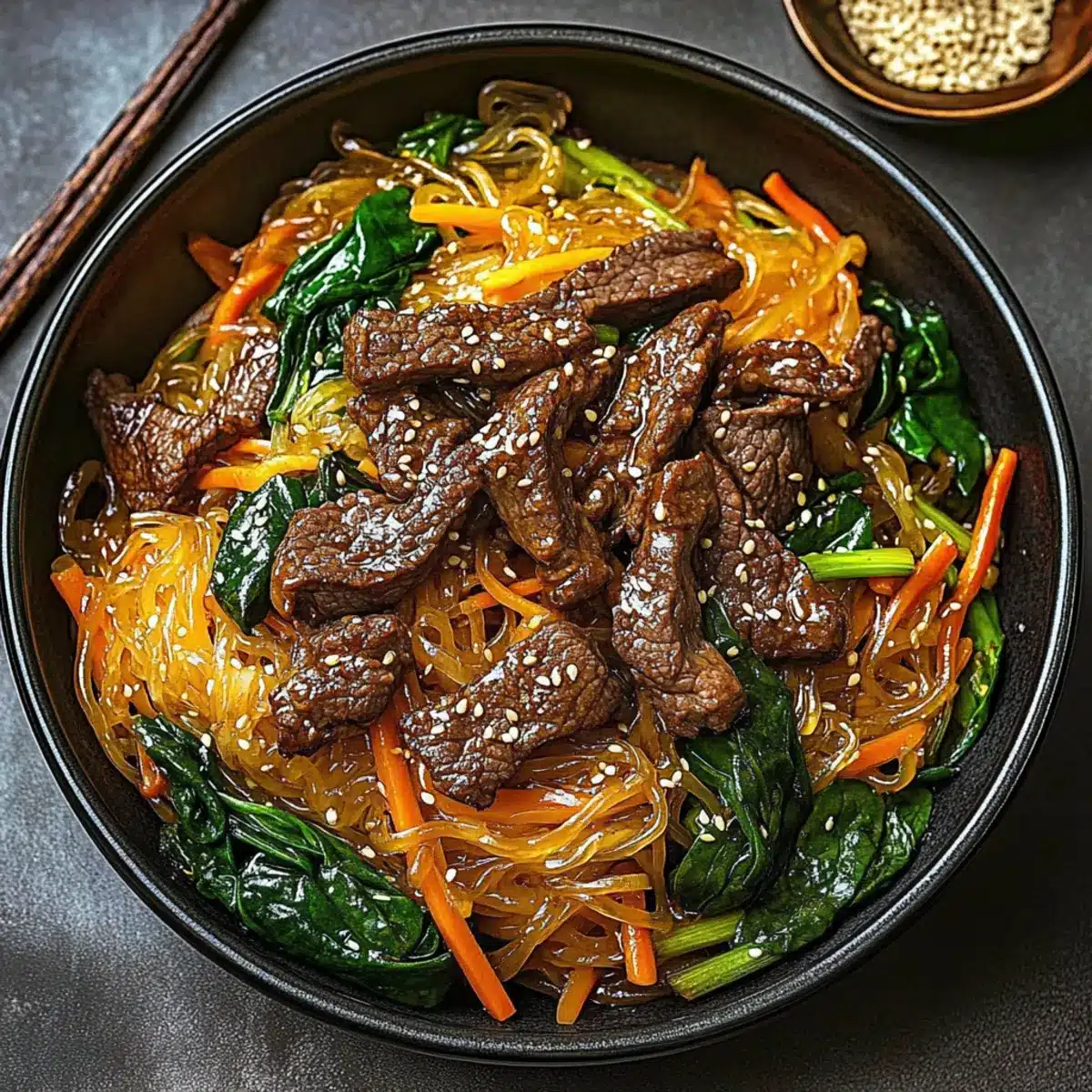
Delicious Homemade Japchae: A Nutritious Noodle Adventure
Ingredients
Equipment
Method
- Soak the sweet potato noodles in hot water for 30 minutes until pliable. Slice your choice of protein and prepare mixed vegetables.
- Heat sesame oil in a skillet, stir-fry the sliced beef for 3-4 minutes until browned. Remove from skillet.
- Stir-fry the prepared vegetables in the same skillet for 3-5 minutes until tender yet crisp.
- Drain noodles and add to skillet with vegetables, followed by stir-fried beef and soy sauce. Mix continuously for 2-3 minutes.
- Taste and adjust seasoning. Garnish with sliced green onions before serving hot or at room temperature.
Leave a Reply